Our recent field expedition set out to explore a rural site, estancia Vega Castillo. This location offered a unique ecological setting and provided us with the opportunity to collect data on bird communities, behaviors and their habitats. While our overall aim for the FEX was to actually compare this wetland with our previously evaluated wetland in El Calafate, I have already written a trip blog about that area, so I will try to not repeat content between the blog posts.
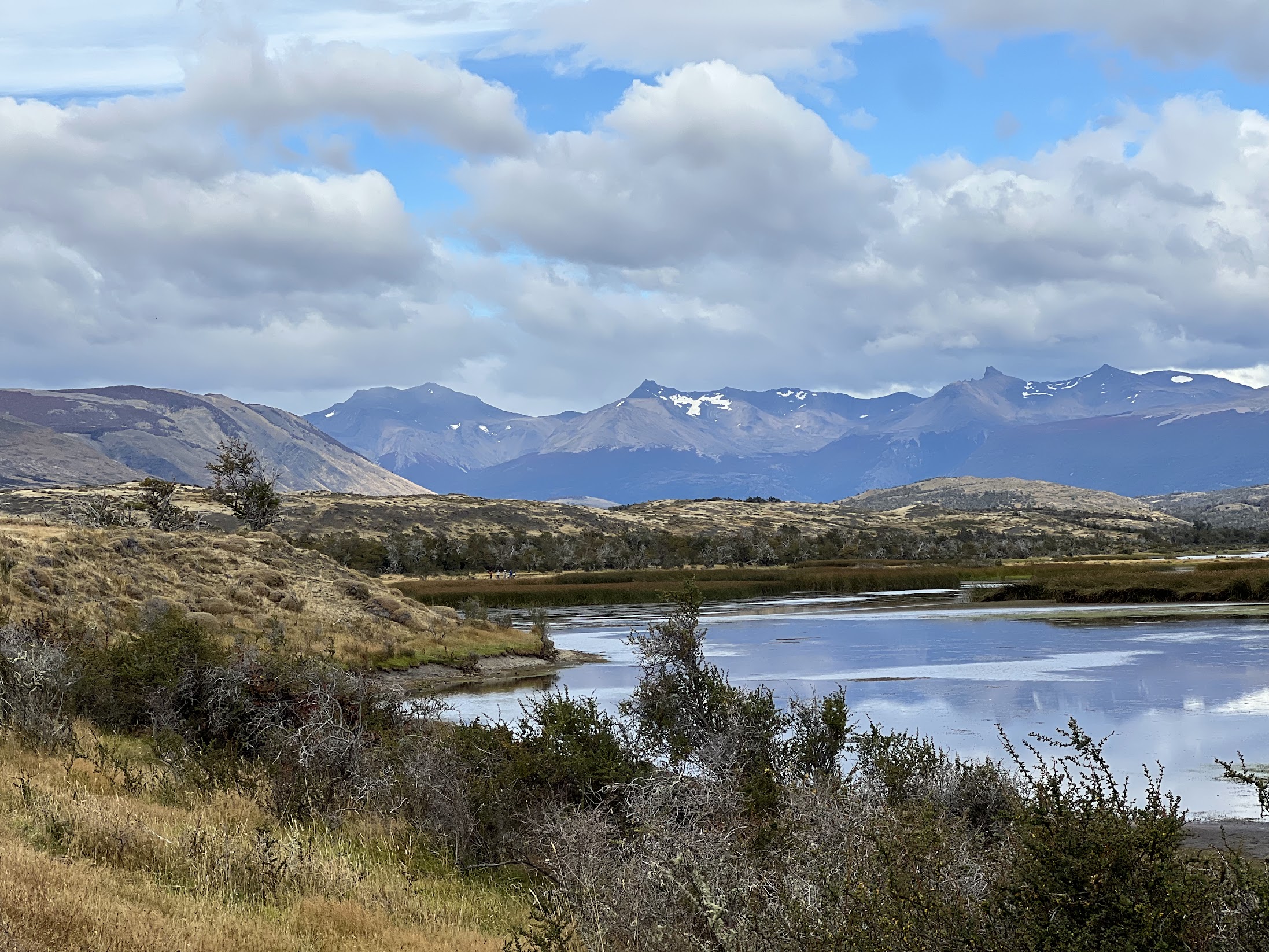
Vega Castillo is far more remote and less influenced by direct human activities, unlike Laguna Nimez. This estancia is surrounded by large tracts of private land and has fewer visitors. Although I expected a higher abundance of wildlife in this rural wetland, the seasonal timing of our visit became a crucial factor in interpreting the data we collected.
At each site, multiple teams worked in designated “stations.” Each station observation lasted exactly 15 minutes and recorded all birds within a 50-meter radius. The goal was to capture a snapshot of bird abundance, behavior, and habitat use. Having several teams made it possible to cover more ground efficiently and reduce the chance of missing rarer species.
We made sure to observe for variables such as: • Species name (in English) • Number of individuals • Behavior type (like flying, foraging, perching) • Habitat type (lagoon, bush, reeds, grassland, etc.) • Visitor count (number of people in the area at observation time) • Location coordinates (latitude and longitude)
We also made sure to record the station number, however that was not as crucial to do at this wetland, since there was no overlap between groups.
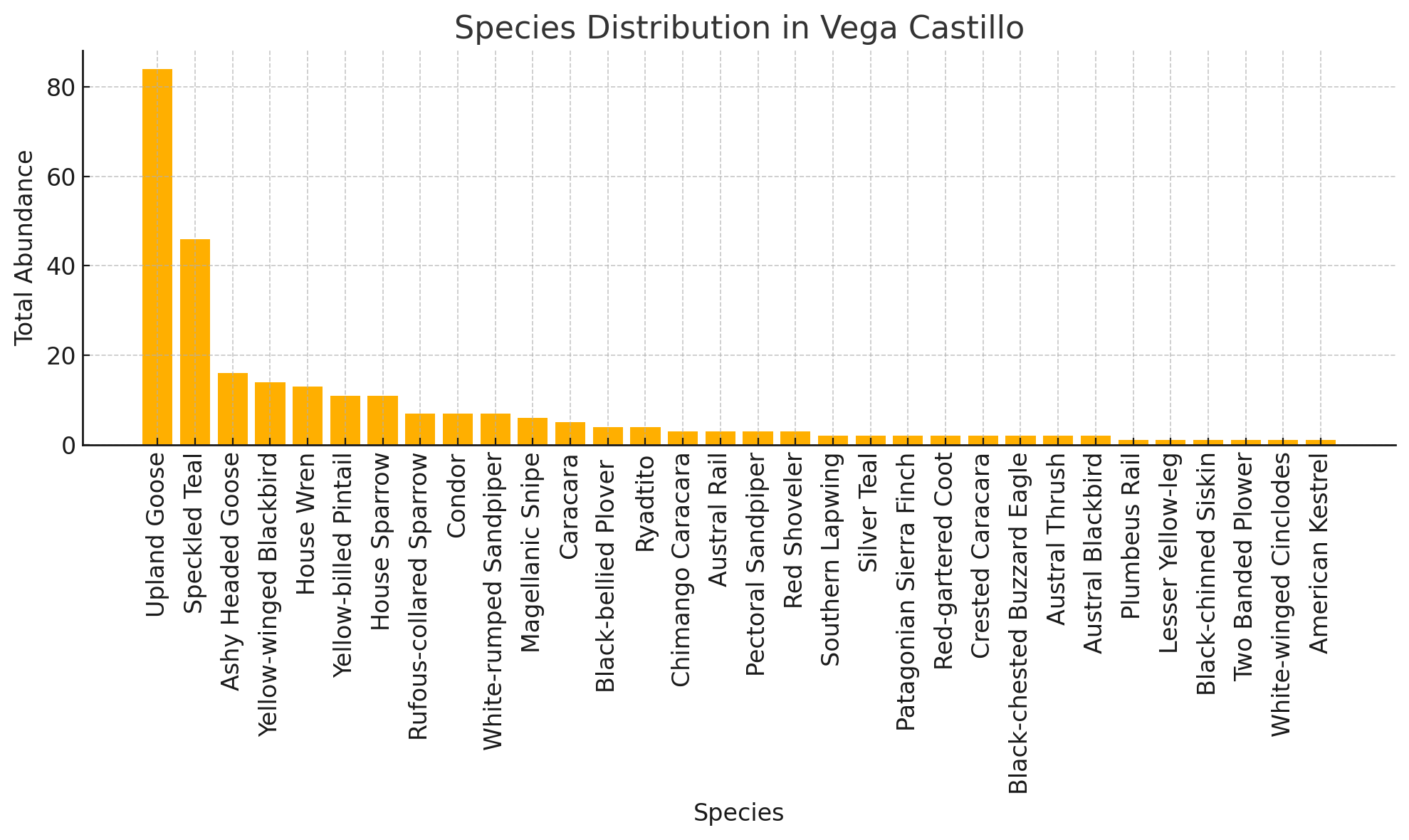
While we did not see the same quantity of birds, we did see a decent variety of species (the most common was the Upland Goose).
While we learned a bit about the wetland itself, and how the seasonal timing affected the amount of birds present, the most interesting part of the FEX occured away from the site, when we got to look at the data.
Data from each team’s recording sheets were entered into a master spreadsheet. We paid special attention to standardizing species names, date formats, and location coordinates, reducing potential errors such as typos or trailing spaces. After these initial checks, our group applied more advanced cleaning methods using regex and other tools to correct any lingering irregularities in the dataset. With the cleaned data in hand, the team performed exploratory data analysis (EDA): we examined frequency distributions of bird behaviors and habitats, computed correlation matrices for our numerical variables, and then moved on to more formal statistical tests. These tests included two chi-square analyses (to compare behavior and habitat distributions between wetlands) and t-tests (to compare mean abundance per station), as well as calculations of standard diversity indices like the Shannon, Simpson, and Pielou indices.
Overall, species richness in the rural site, Vega Castillo, reached 31 species, while the urban wetland at Laguna Nimez recorded 37. However, the distribution of those species differed: Laguna Nimez generally showed higher total abundance. In contrast, Vega Castillo had fewer total birds but demonstrated slightly higher or comparable diversity indices. Notably, Shannon indices were 2.54 (Nimez) and 2.65 (Vega Castillo), showing that the rural site displayed more even species representation despite lower bird counts.
Chi-square tests revealed that both behavior and habitat use differed significantly between the wetlands. Birds at Laguna Nimez tended to be observed swimming and foraging within large lagoon areas, whereas Vega Castillo supported a more even split of flying, foraging, and resting across grassland habitats. A t-test on station abundance yielded a statistically significant result, confirming Laguna Nimez’s higher average abundance. Lastly, a rarefaction curve indicated that, while Nimez showed a stronger initial rise in species discovery, both wetlands would benefit from longer or repeated sampling efforts to capture their full range of biodiversity.