CONS and CLIM 11 Class #
What makes Pali Aike so interesting is the tectonics. Pali Aike sits near a tectonic triple junction, where three tectonic plates meet: the South American Plate, the Scotia Plate, and the Nazca Plate. Over time, as these plates shifted and interacted, particularly through divergent movement, magma was able to rise through the thinning crust. The lava that erupted here was mostly basaltic, meaning it was low in silica and highly fluid. This meant it cooled slower and had more elongated pores. Pali Aike also has shield volcanoes, which are low, wide volcanoes that don’t really erupt in the same way as the typical volcano.
The composition of the rock is also interesting. Much of the magma that formed Pali Aike originated from oceanic crust material, brought up as the plates diverged. This oceanic basalt tends to be rich in iron and magnesium, which is why the lava flows and scoria deposits here typically appear dark gray to black when fresh. Over time, exposure to oxygen and moisture oxidizes the iron content, giving the rocks their distinct reddish-brown and rusty hues.
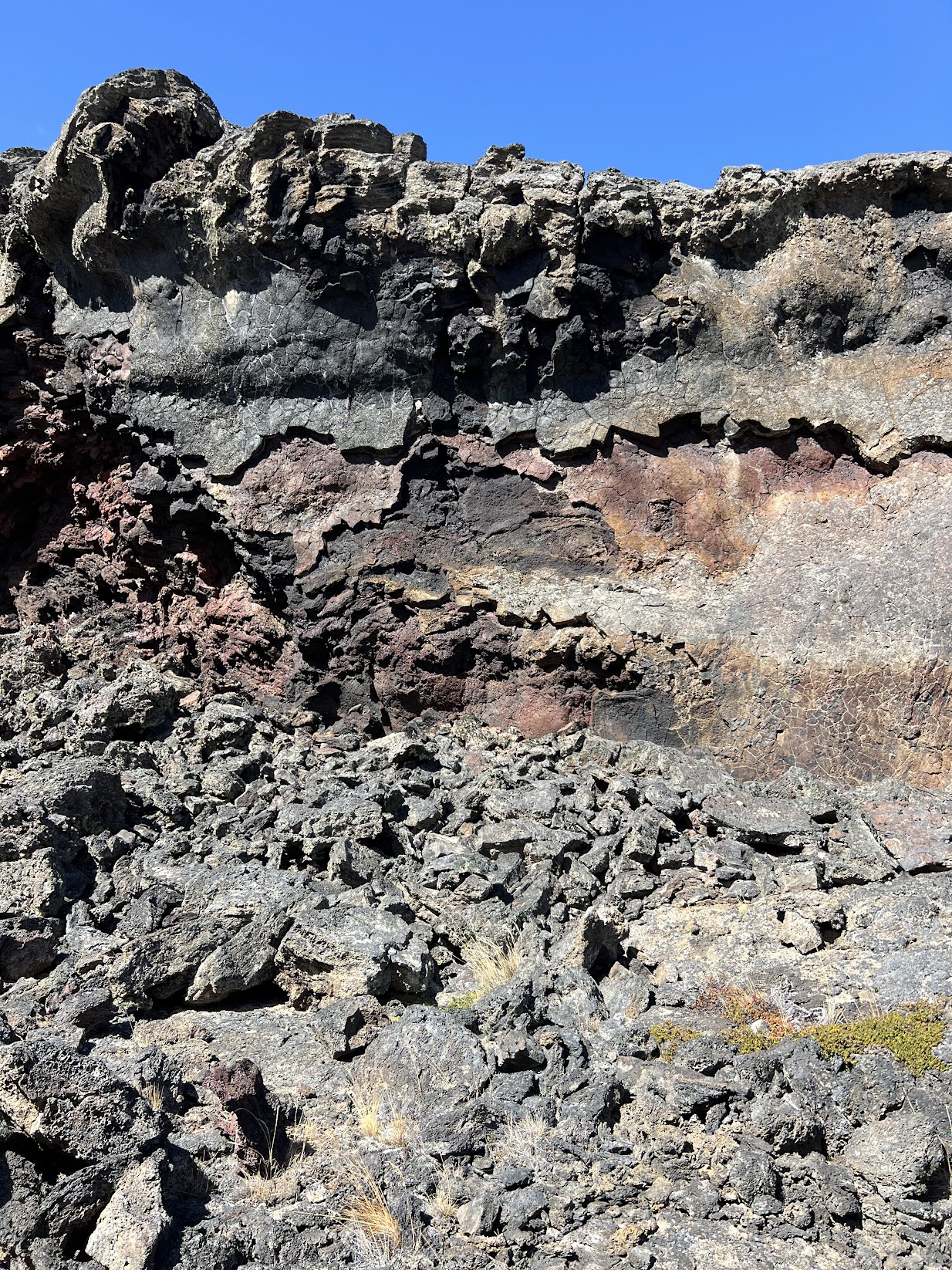
However, not every eruption in Pali Aike was the same. Some were explosive, producing plenty of tephra (fragmented volcanic material) and scoria, which is a rough volcanic rock full of bubbles. There are fields of dark scoria all over Pali Aike, essentially remnants of violent eruptions that hurled the molten rock into the air, where it cooled rapidly and fell back as jagged chunks with circular pores. This is opposed to the basalt with its elongated pores. The crater we visited (Morada del Diablo) was a cinder cone volcano. It was created by multiple short, explosive eruptions that spread the molten rock in the air, and it built the steep cone, largely made up of loose tephra/scoria.
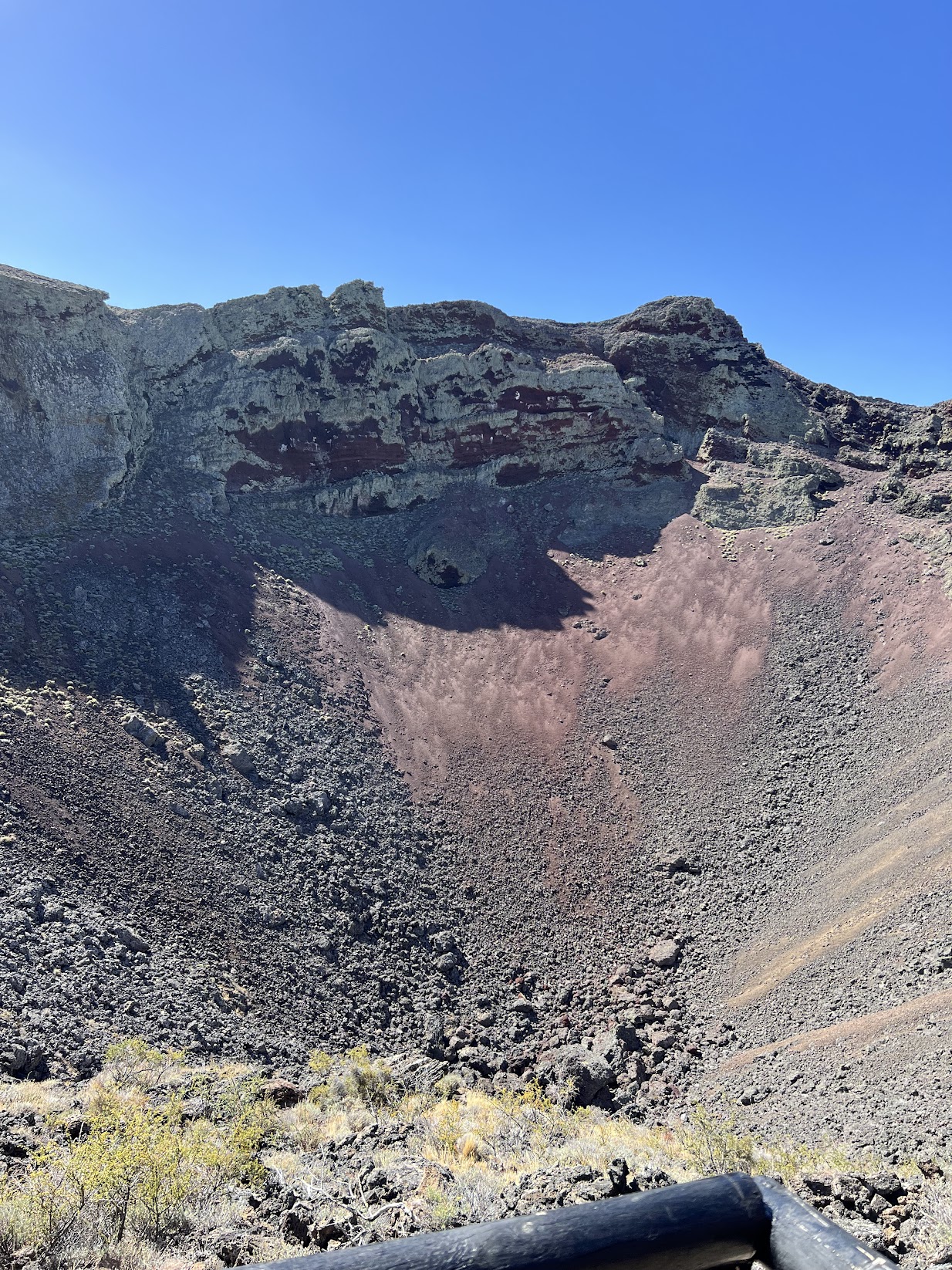
Pali Aike was certainly one of the more unique places we visited. The vegetation and terrain feel very different compared to nearby areas. The volcanic soil is very thin, and there is sparse plant life. However, on the rocks, we were able to see plenty of lichen, and the beginning of a new ecosystem (like we learned in ECO).
Pali Aike is one of the best and only examples of a volcanic field in southern Patagonia. The features and mars-like landscape are very cool to see, and are worth conserving. However, what we discussed was geoconservation. When normal conservation comes to mind, it is often in the context of ecosystems - but how do you conserve something that is completely abiotic? It could be argued that conservation always entails some abiotic conservation, but often times all the emphasis is put onto the biotic elements. The largest threats to a geological site are going to be human impact. Foot traffic and poorly marked trails leading to unneeded erosion and movement of loose rock can alter the geologic structures. While we did not exactly discuss it, something else that came to mind was the impact of collecting rocks. Tourists could be taking volcanic rock from areas like near/around the crater, and if enough people do that, it will make a key difference in the preservation of the geologic site.
Therefore, the big efforts that need to be undertaken at Pali Aike are education, trail marking and management, signage, and enforcement. The education and signage go hand in hand, because one would hope that people will respect an area more if they know why it is important. Trail marking is key because it discourages going off into delicate areas, and can allow for more tourists if done properly. Enforcement is crucial to maintaining the whole park, as well as keeping people from damaging the site. However, all of these efforts require more monetary investment from the government.